Knowledge lives in one person.
When that person goes on vacation or changes roles, the team rebuilds instructions and improvises on exceptions.
Explore Tervali topics
No topics found. Try “processes”, “Caremap” or “training”.
We turn what your team already does well into processes and protocols they recognize as their own: who does it, how, where it is documented and who reviews it. Ready for daily work and the next survey.
Led by someone who has prepared the operating room, sterile processing (CME) and endoscopy for health inspections and accreditation.
When that person goes on vacation or changes roles, the team rebuilds instructions and improvises on exceptions.
The steps are written down, but they leave out resources, records and what to do when something goes off plan.
Versions and evidence are scattered across folders, with no owner and no review date.
What we see
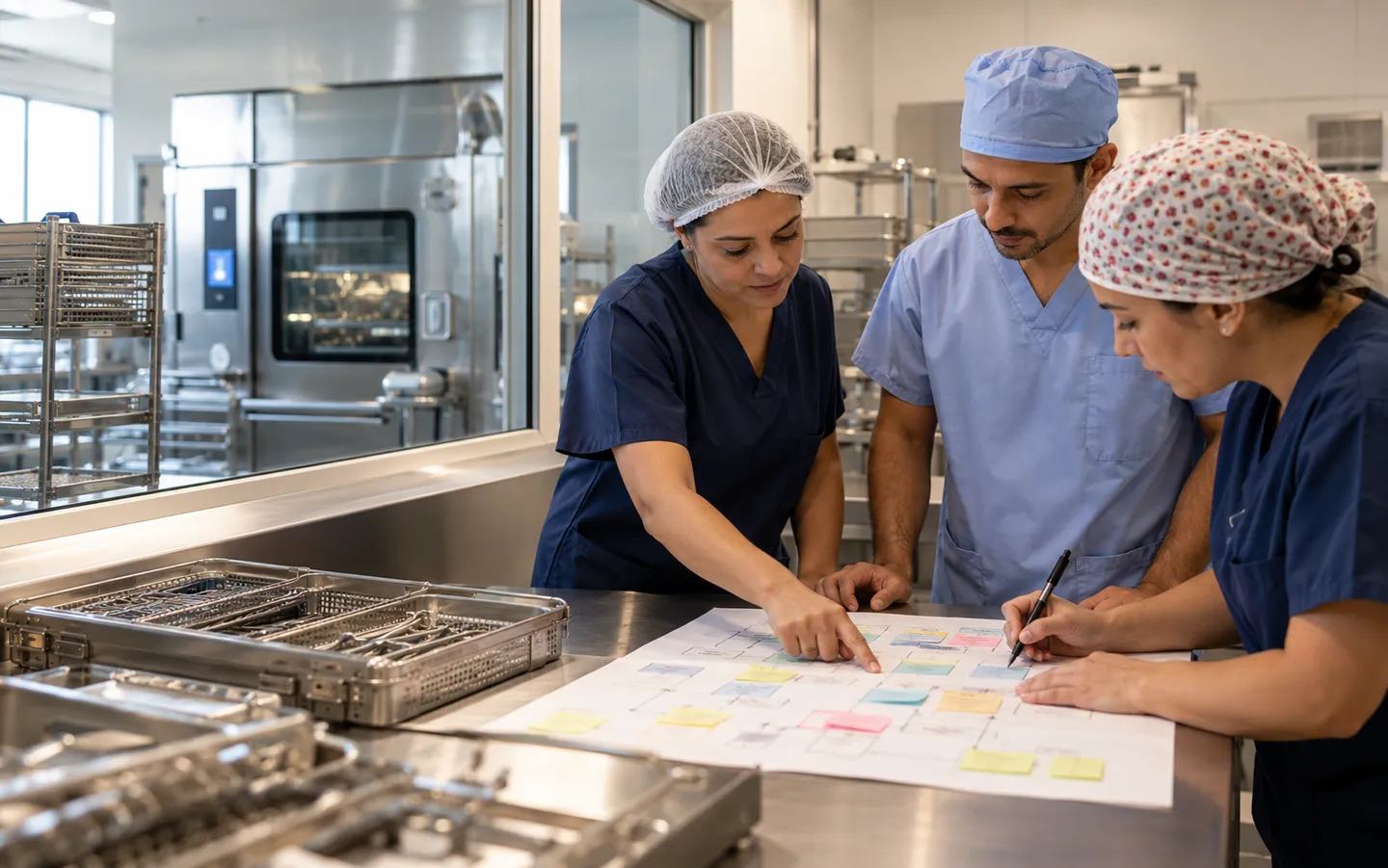
Experienced professionals do the work very well and have little time to write. When a protocol is written far from them, it becomes a document nobody reads. That is why we build it with the people who do the work: we ask, we write, the team reviews and the organization validates.
How we solve it
One process at a time, starting with the highest risk or highest turnover. The team takes part in every step.
Boundaries, the team involved, technical references and who validates. We review what already exists and is still valid.
We listen to the people who do the work and write down the sequence, handoffs, records and what to do with exceptions.
Technical review by the organization, team guidance and observation of use on real shifts.
Every document gets an owner, a version and a review date. The routine survives the next team change.

Who leads the work
The consulting work is led by a nurse who moved from bedside care to hospital management, overseeing the operating room, sterile processing (CME), imaging and the emergency department.
Quick assessment
Answer four questions about the process. You instantly see where the routine is most fragile and which step to start with.
No. We review what exists, what is still valid and the gaps in the chosen process.
Yes, with a defined scope, current applicable references and the participation of the clinical leads.
It helps organize processes, documents and evidence within the agreed scope. Surveys and certification belong to the accrediting bodies.
Technical approval, licensing and accreditation follow their own owners and processes. Tervali prepares processes, documents and evidence; certification is granted by the accrediting body.
Related insights
 Quality and team development · 7 min
Organize protocols, control versions, and assess healthcare team competencies, with shift-based training, metrics, and a verifiable update workflow.
 Sterile processing and process safety · 7 min
How to structure traceability in the sterile processing department (SPD), link sets and cycles to distribution, handle exceptions, and measure records, with RDC 15 and the regulatory review verified.
 Clinical management and billing · 6 min
How to reduce duplicate documentation, audit the causes of claim denials, and track documentation quality with metrics, accountable owners, and a verifiable process.
 Operating room management · 6 min
How to organize the surgical schedule, verify patient preparation and supplies, integrate maintenance, and define contingencies with clear metrics and owners.