The opportunity exists. The plan does not.
There is demand or an interested client, but no one has listed what must be ready to see patients.

Explore Tervali topics
No topics found. Try “processes”, “Caremap” or “training”.
A new specialty, a service line for employers, expanded care. We take stock of what your organization already has, show what is missing and organize staff, partners, costs and routines so you open on a date you can keep.
Led by someone who built an occupational health service inside a hospital, from the first exam to the first contract.

There is demand or an interested client, but no one has listed what must be ready to see patients.
Staff, supplies, schedules, partners and records move at different speeds. Dependencies surface the week you open.
Volume, turnaround and price are negotiated without knowing the cost, the room capacity or how long results take.
What we see
Rooms, professionals, lab and imaging are usually there, spread across different departments. The work is turning those pieces into a patient pathway, finding the one piece that is missing and settling cost, turnaround and the proposal with finance before promising any date.
How we solve it
Each step ends with a leadership decision: move ahead, adjust or wait. No discovering open issues on opening day.
Demand, available resources, gaps and dependencies. What already exists and what must be hired, bought or sourced through partners.
Patient pathway, responsibilities, partners and result turnaround. Costs and commercial assumptions worked out with finance.
Supplies, schedules, records and team guidance, with clear criteria for what must be ready to start.
We follow the first patients, record what got stuck and feed the adjustments back into the plan.

Who leads the work
The consulting work is led by a nurse who moved from bedside care to hospital management, overseeing the operating room, sterile processing (CME), imaging and the emergency department.
Quick assessment
Answer four questions about the service you want to open. You instantly see what is likely to stall implementation and which step to start with.
Yes. The scope can be a new specialty, expanded care or the reorganization of an operating service.
It can include organizing available cost data and the assumptions behind the commercial proposal, always with finance. The depth is set in the scope.
Yes. Preparing staff for the new routines is part of the project. Clinical content and professional requirements are validated by the clinical leads.
Facility design, licenses, clinical validation and specialized financial analysis involve the qualified professionals. The proposal spells out these dependencies and each party's role.
Related insights
 Hospital operations · 8 min
How to launch a specialty or occupational health line by building on what already exists: inventory, gaps, patient journey, costs, turnaround, and opening.
 Quality and team development · 7 min
Organize protocols, control versions, and assess healthcare team competencies, with shift-based training, metrics, and a verifiable update workflow.
 Materials management and clinical operations · 7 min
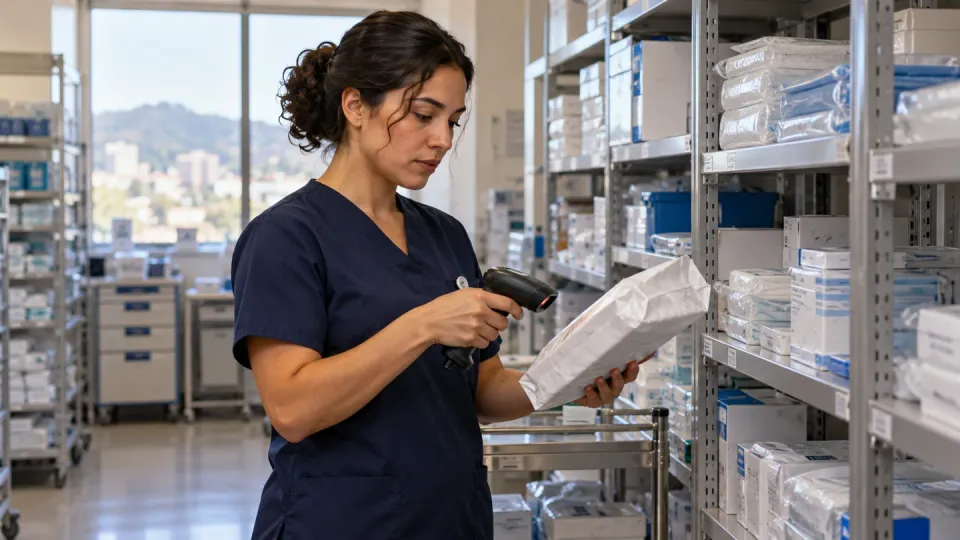
How to organize clinical inventory by lot, expiration date, and location, set restocking levels, and measure stockouts, losses, and search time in hospital units.
 Management and metrics · 6 min
Organize a metrics dictionary, validate data, and connect costs to patient care output with formulas, owners, and an example of a monthly cost close.